
Afloat in Venice – the ‘city on the water’

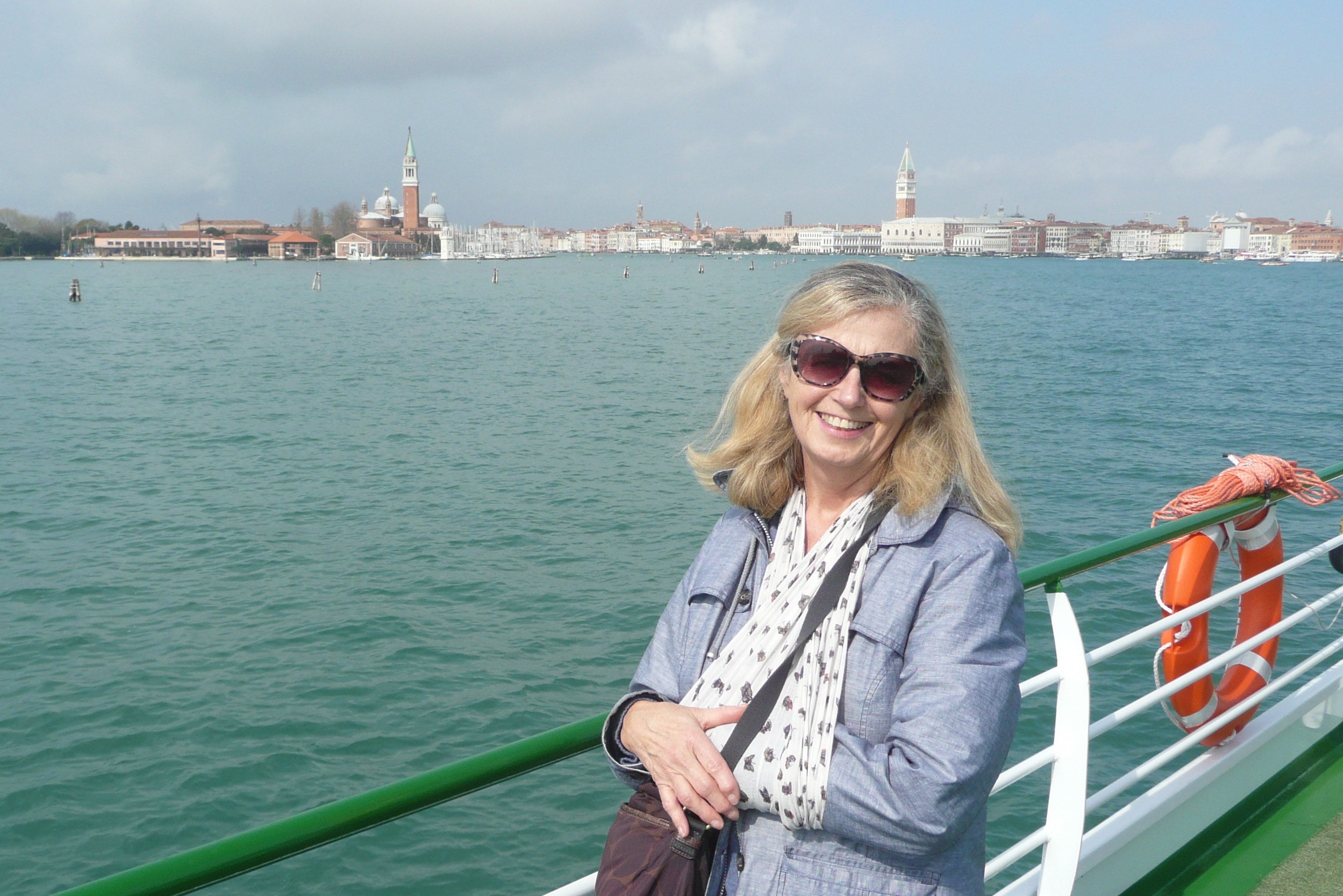
Breaking my wrist the day before departing for our trip to Venice was bad luck. But after a stint in A&E, I’m ready to go – a half-cast on my arm, a supply of painkillers and an appointment at the fracture clinic the following week. I’ve had to repack, as can’t do up jeans or trainers and can only get into loose sleeved tops. Even basic tasks need two hands, so Alec is helping out – cutting up my food, carrying all the bags and more!
So, here we are in the magical city on the water for our ‘Venice from the Water’ package organised with Voyages Jules Verne. For first timers like us, it’s the perfect introduction to the historic city – four nights aboard the MS Michelangelo, a river cruise ship belonging to French cruise company Croisi Europe, inclusive of meals, drinks and sightseeing trips. The itinerary allows plenty of free time for exploring on our own as well as optional excursions to interesting local places.
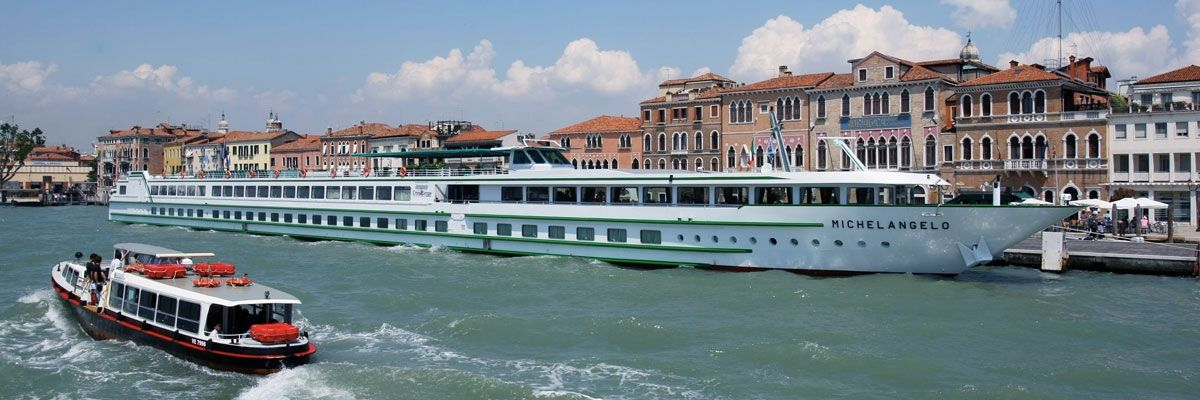
Arriving at Marco Polo airport in the late afternoon, we join a small group of Brits transferring to the Michelangelo at the cruise terminal. It’s all very friendly and informal and we soon have the keys to our cabin and are settling in. While the crew are bi-lingual and ship announcements are in French, English and Spanish, most of the other passengers are French. We meet some of them on the first evening, when all passengers are invited for a ‘welcome’ cocktail in the lounge and the ship’s crew introduce themselves one by one.
Our floating hotel’s 78 compact but comfortable cabins are spread over on two decks – all with air-conditioning, large picture windows and private facilities. There’s a large lounge and bar with panoramic windows, a shop and a spacious sun deck. Meals are taken in a bright and airy single seating restaurant. On three of our four nights on board, Michelangelo is moored at Riva Sette Martiri, a convenient short walk from St Mark’s Square.
At dinner, tour manager Sue shows the UK group to our allocated tables and outlines the itinerary for the next few days. Sue, who speaks fluent Italian, offers practical tips on making the most of our stay – from describing the excursions on offer to advice about using the vaporetti (public water buses) to explore Venice. As we socialise with our fellow passengers over four courses of French cuisine served with wine, Michelangelo sails from the cruise terminal to her overnight mooring in central Venice.

Next morning, we help ourselves to the generous breakfast buffet while Michelangelo cruises north on the Venetian lagoon. It’s a bit hazy, but we can make out one of Venice’s most photographed landmarks, the island of San Giorgio Maggiore and its magnificent church and campanile (bell tower). The lagoon covers an area of 550 sq kilometres (210 sq miles) and is connected to the Adriatic Sea by three inlets. It’s a mix of mud flats, tidal shallows and salt marshes with fluctuating water levels , especially in the spring when the high tides (acqua alta) regularly flood much of Venice. After Michelangelo returns to her mooring, we disembark for a walk before lunch. Later in the afternoon, we join an excursion by a smaller boat to the nearby lagoon islands of Murano and Burano.
Murano – the ‘glass island’ has been producing fine glasswork since the 13th century. Although demand has waned in recent years, glass making is still the island’s main industry. We join a queue filing into one of the factories and watch a glassmaker at work, blowing and shaping the molten glass in the dusty heat. After several forays into a red-hot furnace with an iron rod, one glassmaker produces a prancing glass horse and everyone claps. Afterwards, we browse the factory’s extensive showroom but are not tempted to buy.
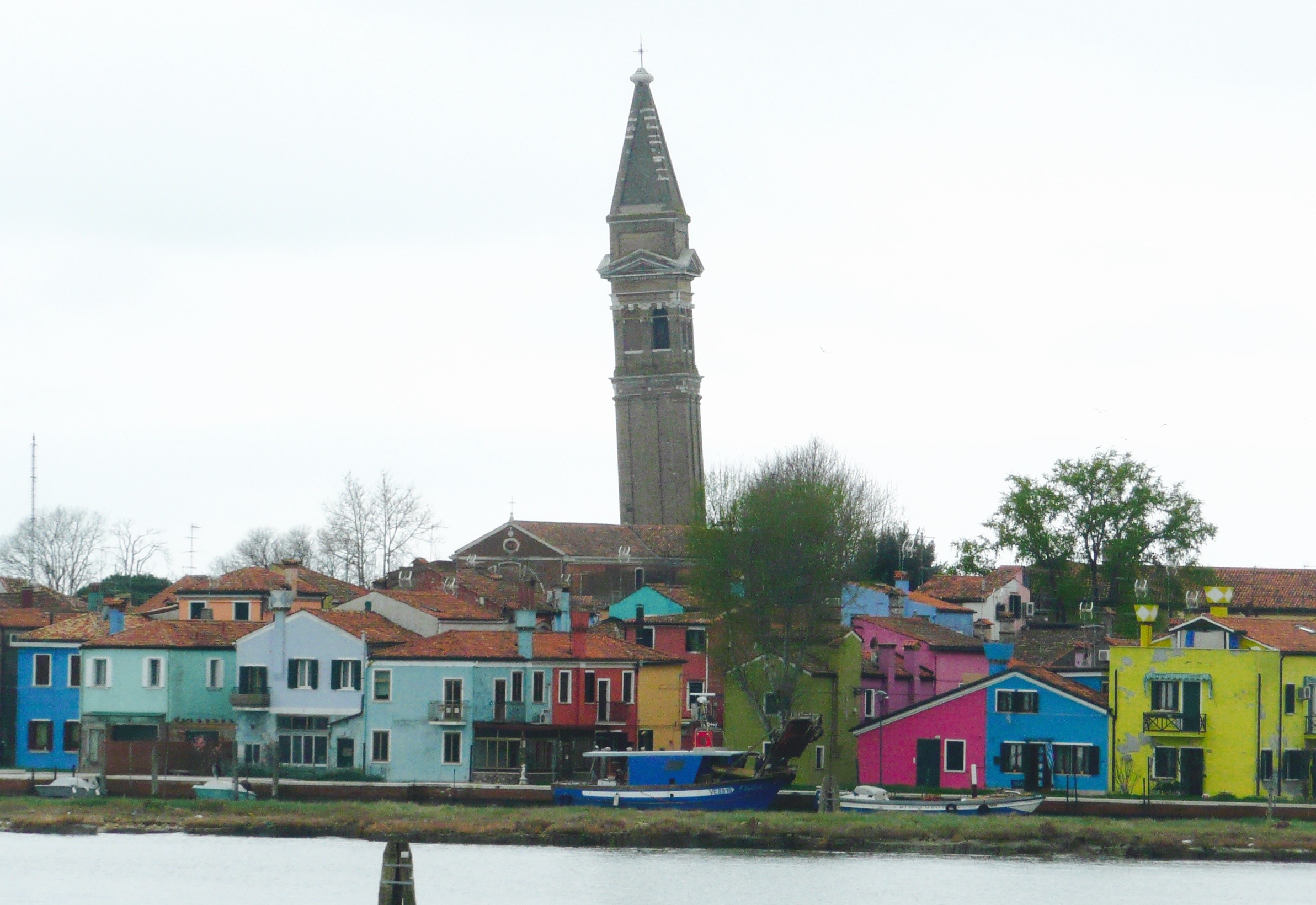
The tiny island of Burano is a further 20 minutes north by boat. As the island comes into view, we immediately notice the leaning campanile of the island’s 16th century Church of San Martino. Bell towers (campanili) are an important feature of many churches in this part of Italy and a notable number lean over due to the unstable subsoil.
Burano is famous for lace making and for its quayside houses painted in bright contrasting colours. Narrow, maze-like passageways behind the canals open out into small squares with further colourful properties, many have washing hanging out to dry in the warm sunshine. The island seems homely and not just a tourist attraction, which is part of its appeal. We buy ices and wander alongside the canals as far to the Church of San Martino where we stand against its tilting campanile and squint up into the blue sky. Then it’s back to Venice for dinner on the ship and a nightcap in the bar before turning in.
Day two, and local guide Maria leads an optional walking excursion to the Doge’s Palace (Palazzo Ducale). We’ve all been issued with ‘whisper sets’ to follow Maria’s commentary. As we walk, she tells us how Venice and its lagoon became a UNESCO World Heritage site in 1987. This recognised the importance of the city’s artworks, architecture and unique location on 118 small islands linked by 150 canals and 477 bridges (we cross seven on our short walk). Venice also has 139 churches (88 still in use). Over 20 million people visit the city every year but surprisingly, less than half stay overnight. Some are day trippers and others passengers from visiting cruise ships, or are starting or ending their cruise in Venice. The city has become one of Europe’s busiest cruise ship terminals, despite the controversy about large ships using the port and the damage they cause to the fragile environment. Yet, even with mass-market tourism, the city’s population is in decline, due to dwindling job opportunities, soaring property prices and the high cost of living.
The Doges Palace – one of Venice’s Byzantine landmark buildings – adjoins St Mark’s Square and was the residence of the Dukes of Venice and seat of the Venetian government for nearly seven centuries. The present palace dates from the 14th century and is a splendid example of Venetian Gothic architecture, boasting elegant colonnades, white Istrian stone and pink marble cladding.
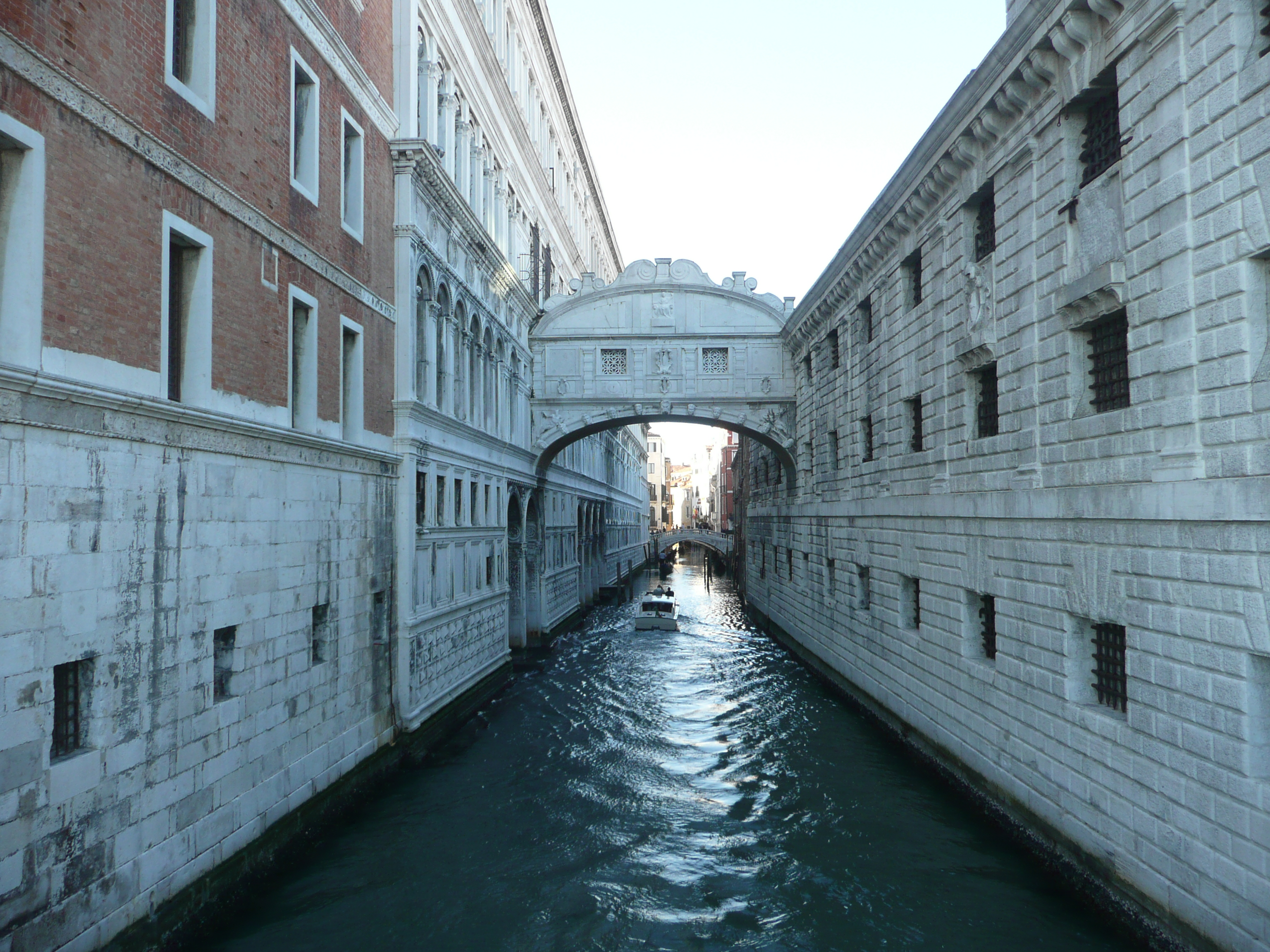
We tour the palatial rooms adorned with priceless sculptures, ornate ceilings, artworks and vast paintings by Tintoretto, Veronese and other artists. We take in the city views from the balcony of the Grand Council Chamber and then follow the path taken by condemned prisoners, across the Bridge of Sighs and into the dark dank cells of Venice’s 16th century prison. It’s quite a relief to emerge into the sunshine of St Mark’s Square after our fascinating tour. We thank Maria, and then join the crowds in the piazza, where lively classical music is being played by a string quartet outside one of the restaurants.
The queues for St Mark’s Basilica and its Campanile stretch across the square, so we put these on hold for our next visit and buy vaporetti tickets to explore the Grand Canal instead. The three kilometre canal is the city’s main waterway and traces a reverse S-course, from St Mark’s Basilica to the Santa Lucia railway station at the western end. The canal – the subject of countless paintings – is lined with over 170 historic buildings and is populated by small watercraft, mainly vaporetti, private water taxis and gondolas. Our short vaporetta ride affords us close up views of architectural treasures like the basilica of Santa Maria della Salute and Venice’s many palazzos (grand residencies), some emerging directly from the water.

Alighting at the famous Rialto Bridge, the first of the Grand Canal’s four bridges, we take our time meandering back to St Mark’s Square through the busy Rialto market and a maze of quaint narrow streets, bridges and alleyways.
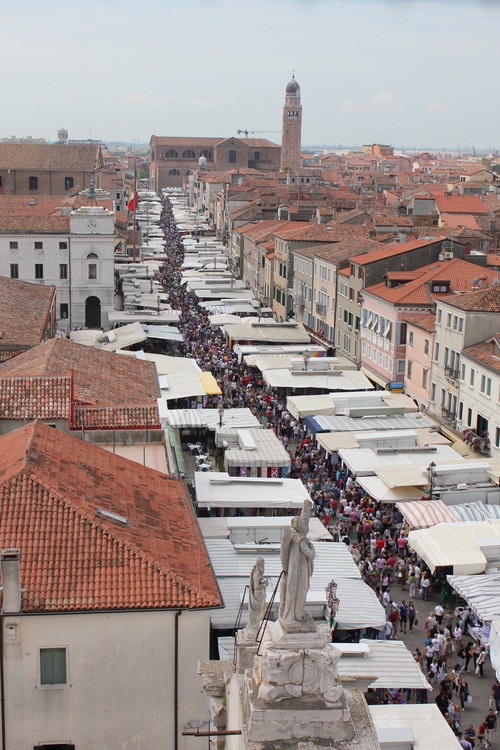
On the last day of our trip, Michelangelo cruises south on the lagoon to Chioggia, a small town with an extraordinary fish market. Like Venice, Chioggia has canals and medieval churches, but unlike Venice, it also has traffic! We have a couple of hours to explore before returning to the ship for lunch. It’s market day and the place is buzzing with local shoppers browsing stalls selling fresh fruit and vegetables, bargain clothing, toys, household and leather goods. We also walk through the ‘pescheria ‘ the covered fish market and the abundance and variety of fish displayed is unbelievable. A little way beyond the market and canals is the church of San Domenico, which sits on its own little island and contains artworks by Carpaccio and Tintoretto as well as one of the world’s oldest and largest wooden crucifixes above the high altar. We walk across the bridge to the church but find the door firmly locked so can’t view the treasures within.

In the afternoon, we join a group coach trip from Chioggia to the historic university town of Padua and a guided tour of St Anthony’s Basilica (Il Santo). The vast basilica, took over 70 years to construct (from 1238 to 1310) and is the burial place of St Anthony of Padua, the town’s patron saint. It’s a key pilgrimage site as the saint’s relics are displayed in one of the basilica’s nine chapels. The huge church has many notable monuments and works of art and is attached to a Franciscan monastery with five cloisters. These contain many ancient artefacts including a magnificent 200-year old magnolia tree, which we are told, flowers profusely every year.
At the end of the tour, we walk into the town for coffee and pastries at Cafè Pedrocchi, a neoclassical coffee house that has been a favourite meeting place for students, academics and locals since it opened in 1831. It is next to the Palazzo del Bo, the main building of the old university, where Galileo Gaililei taught during his 18 years in Padua. Here, he discovered the moons of Jupiter, Saturn’s rings and developed his theory that the earth evolved around the sun. Guided tours are offered around Galileo’s lecture hall and also to the world’s first anatomy theatre, a steep six-tiered lecture hall built in 1594 for scientific autopsy.
The coach returns us to the ship, which has sailed from Chioggia and is now berthed at the Venice cruise terminal for our last night on board and a celebratory gala dinner. As we dine in style, we reflect that staying ‘ on the water’ was the ideal introduction to this most beautiful of cities. We will definitely be back for another visit.
Venice from the Water costs from £745 per person (two sharing) including BA flights (Gatwick), transfers, four nights’ full board accommodation including drinks on the MS Michelangelo, excursions as per the itinerary and the services of the cruise director.
Further optional excursions available (additional cost).
Call Voyages Jules Verne on 0845 166 7035, www.vjv.com.
Photography credits: Grand Canal, Venice by Wolfgang Moroder, Chioggia market by Lynn Liang
